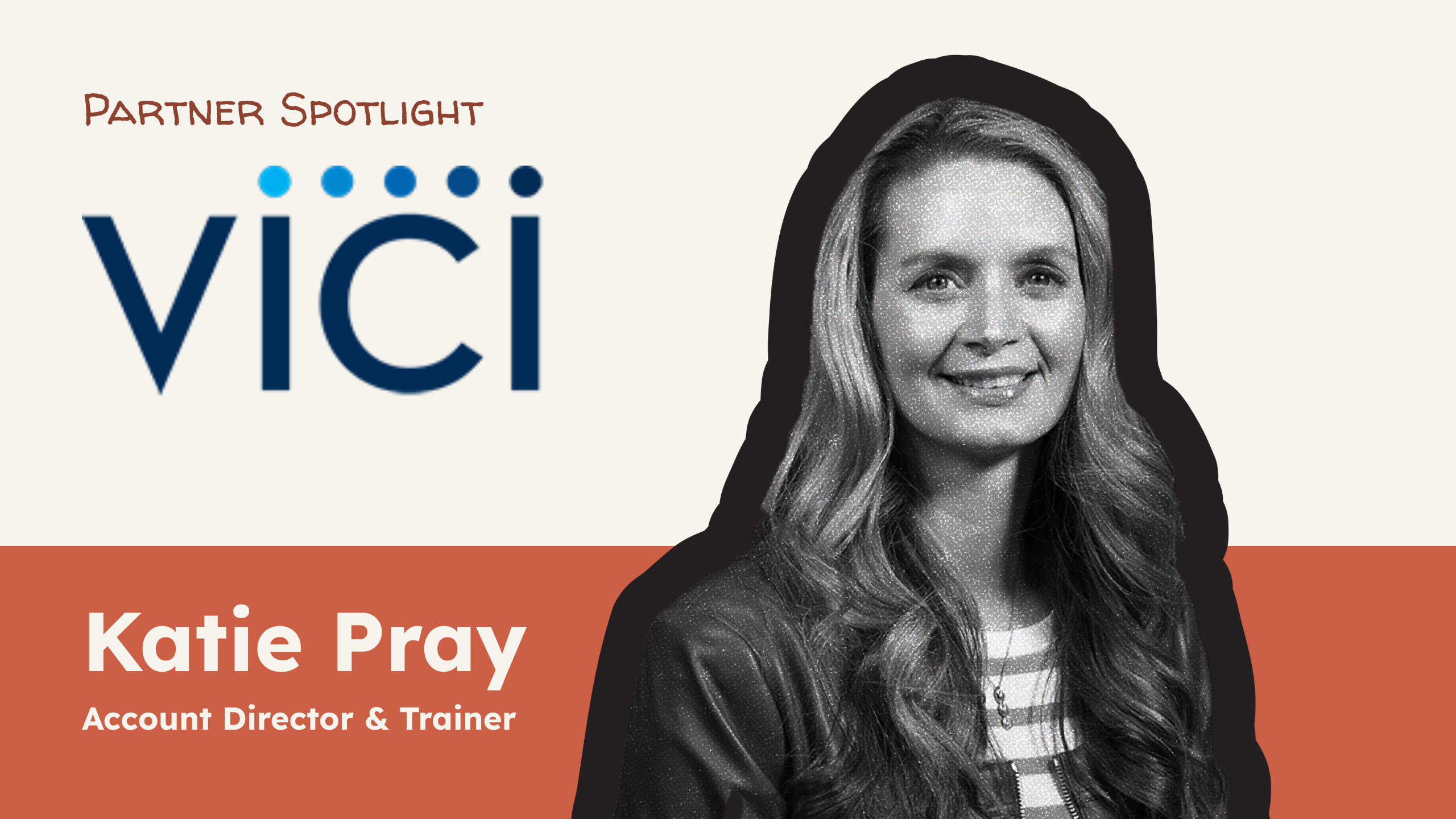
At Rock Paper Scissors, we work with industry leaders to offer clients a wide range of marketing and advertising solutions. We’re excited to welcome Vici Media as our newest partner. We recently sat down with account director and trainer Katie Pray to discuss the evolving digital landscape and learn how Vici helps businesses grow. Grab your coffee, tea, or emotional support water bottle, and let’s dive in!

RPS: We always like to start with a little background information. How did you get into digital advertising?
Katie Pray (KP): Growing up, I wanted to be a reporter and work for ESPN. However, during a news internship my junior year of college, I realized this was not the right fit. At that point, I had too much invested to change my major, so I graduated with my broadcasting degree and took the first job I was offered, which was in customer service. I stayed for about two years, then went back to school, earned a degree in business administration, and took a sales position at a local radio station.

A few years later, the station brought on a third-party provider to be able to sell digital advertising, and we started to become more of a media company. I sold digital advertising for a few years and eventually, an account director and trainer position opened with the company we had partnered with, so I threw my hat in the ring, and the rest is history.
RPS: What are you most excited about with digital advertising right now?
KP:
I love the fast-paced, innovative ways it shows up every day.
For example, banner ads were all we had for a long time, but as social media evolved, it opened multiple advertising opportunities. Video has really taken off, and the pandemic accelerated connected TV, where people started streaming more, and now, it’s to the point where connected TV ads are not just clickable but interactive. For example, if you’re watching something on Amazon Prime, you can click a button to add a product to your cart. Or, you can use your phone to scan a QR code on your TV screen.
Overall, it’s really changing how people consume media. And it’s not just the ads you see on TV or social media either. You have influencers on social media, too. Who would have ever thought we would end up in a space where you can have a channel, go about your life, start to go viral, and then the next thing you know, you’re making a lot of money because of advertising? It’s really cool to see where we’ve come from and where we’re going.
RPS: Rock Paper Scissors shows up for clients as their marketing department. How does Vici Media show up as a client’s digital media/advertising department?
KP: Our mission statement ends with making our partners look like rock stars. We want to showcase our partners and do all the behind-the-scenes work to do just that.
Our Digital Marketing Products make you look like a rock star to your clients.
Vici Media – Mission Statement
We take a comprehensive, hands-on, collaborative approach. Digital advertising is never a one-size-fits-all solution. We like to dig in, learn about the business, and make recommendations based on past successes and what will align well with their goals. No two strategies are the same, and every recommendation is built around helping businesses shine with their customers.
RPS: What option would you recommend to a business that’s never tried digital advertising before?
KP: I recommend starting with the basics. Most of the time, people don’t fully understand digital advertising as a whole, but can understand something like Facebook. It offers a strong connection point because they understand it at a consumer level and most likely have a business page. Typically, I would start by reviewing their social media, recommend an approach based on that, and then provide a relatable example.
For instance, I’m a mom, so targeting categories that people might use to connect with audience members like me would be parents of children or toddler books, toddler toys, things that I’ve done or researched online that would put me in those behaviors. Now they have the opportunity to choose which behaviors to use to reach their target audience.
Being able to explain things in a way people can understand will go a long way. It provides a solid foundation for what ads could look like and makes the content more digestible and relatable. For those who are just starting to dip their toes in, I always recommend starting with social media.
RPS: What is the biggest misconception you see when it comes to digital advertising? How do you help people overcome that?
KP: The number one thing I see is that because digital is more trackable than other forms of media, business owners think you can wave a magic wand, and it will cure all your woes, but that’s not the case. Yes, it is more trackable than traditional advertising, but there’s not necessarily a way to know a particular person saw an ad, clicked on it, and purchased $25 worth of product. There are still limitations for several reasons, including privacy laws. While it’s more trackable, it’s not going to be your magic fix.
As with any kind of advertising, it takes time to get the ball rolling and see results. You need time for the ad creative and exchange to be optimized, you need the right audience and the right message in place.
Are the phones ringing? Are the doors opening? Are you seeing new faces? Are your sales increasing year-over-year? Those are the metrics you want to look at to help determine success.
RPS: What is your most popular product? Why?
KP:
Social mirror is our #1 selling product right now. It’s highly versatile, and we don’t need elaborate ad creative. It’s a product that lets us pull directly from a client’s Facebook, Instagram, X, TikTok, LinkedIn, etc.
There are also many ways to target the audience for those ads. We can target using behavioral data, artificial intelligence, keywords, retargeting, or a list of past or current customers, to name a few. There are also multiple ad options as well—single-image ads, video ads, a carousel, or a story format. It’s highly versatile and doesn’t look like an ad. Consumers are used to shying away from clicking on ads, but because social mirror ads look like regular social posts, we’re used to engaging with those, and they tend to get higher engagement numbers.
RPS: Can you explain how digital advertising can scale with a business?
KP: You can start with the bare minimum, and as that campaign gains traction, you can add a second digital product or target a different audience with a different message as a form of A/B testing. Once you start seeing success, you don’t want to shift gears right away. Keep investing in what is working and supplement that foundation.
People remember the business that gets its name out there first. They remember the brand name. If you can get top-of-mind awareness, that’s going to hit, and that’s where digital comes in. The more you put into it, the better off you’ll be.
RPS: Okay, this is our last serious question—is there anything else you want our audience to know about digital advertising right now?
KP: Do it! It can work for most types of businesses. We’re here to educate business owners on the types of products available and how they work. Once they understand it, they feel more confident about making a purchase. We’re here to ensure they understand so they can invest with confidence and grow their business.
RPS: And to end with something fun, what’s your favorite game?
KP: I like to play mindless, easy games. I love to play Sorry and Trouble. Another one that our family has gotten into recently is Taco Cat Goat Cheese Pizza. I like games that don’t require much thought, so that I can enjoy sitting around the table with my family and playing with the kids.
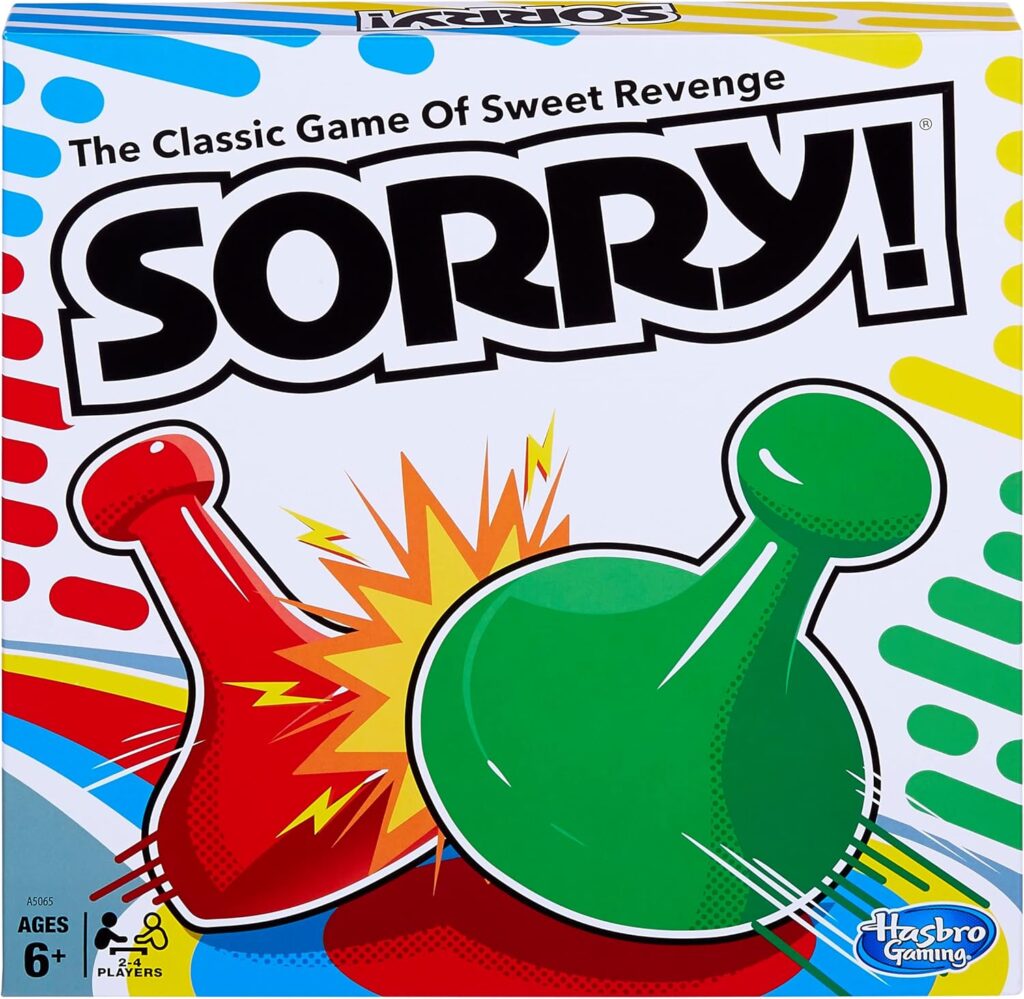
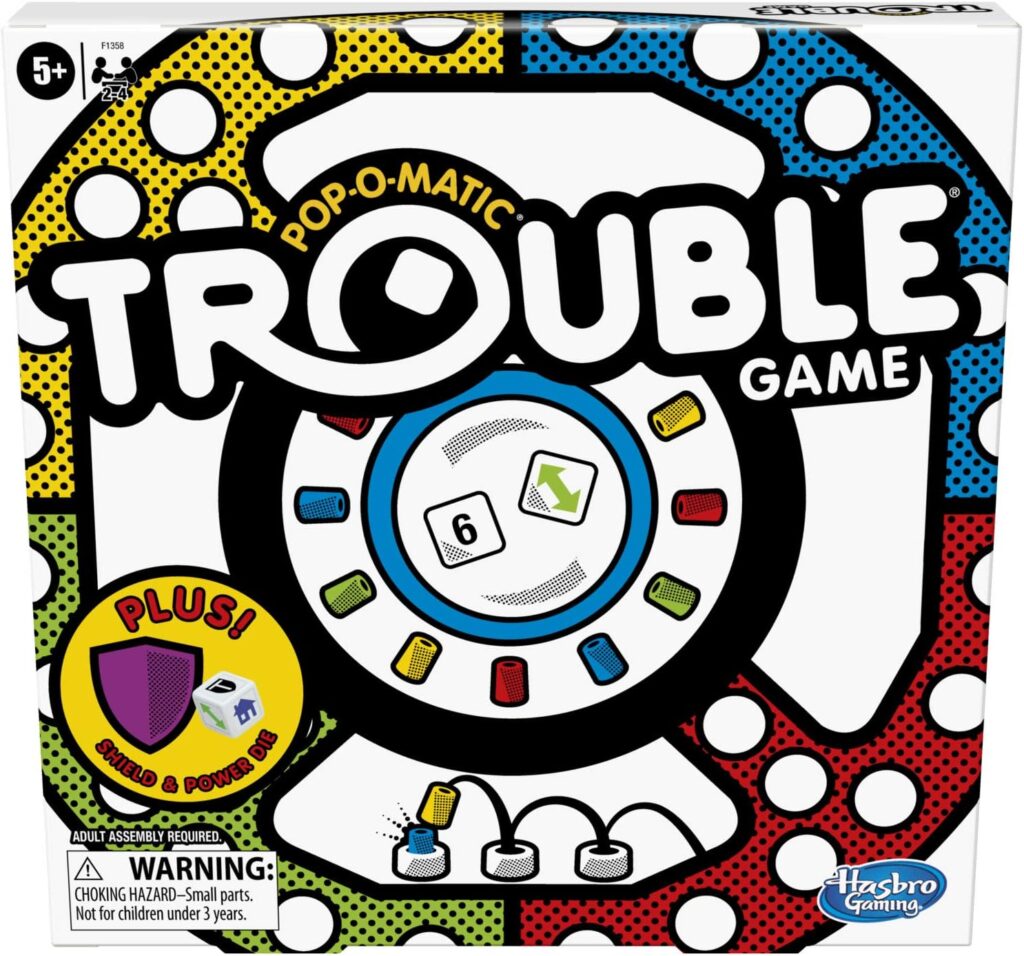
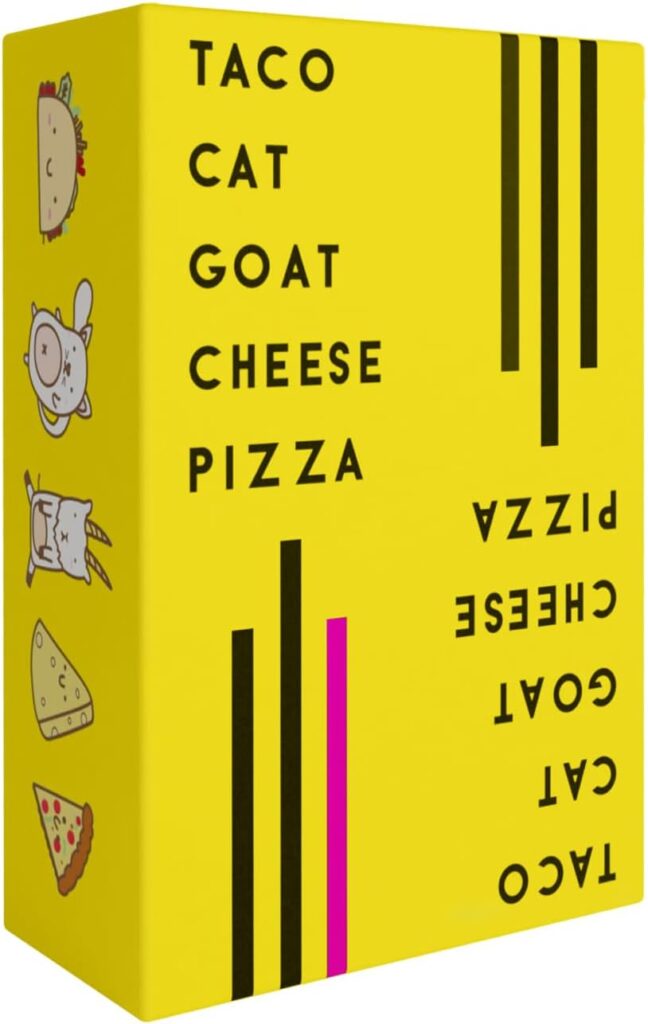
Images Source: Amazon
We’d like to thank Katie for taking the time to speak with us. If you’re interested in learning what digital advertising could do for your organization, let’s talk!